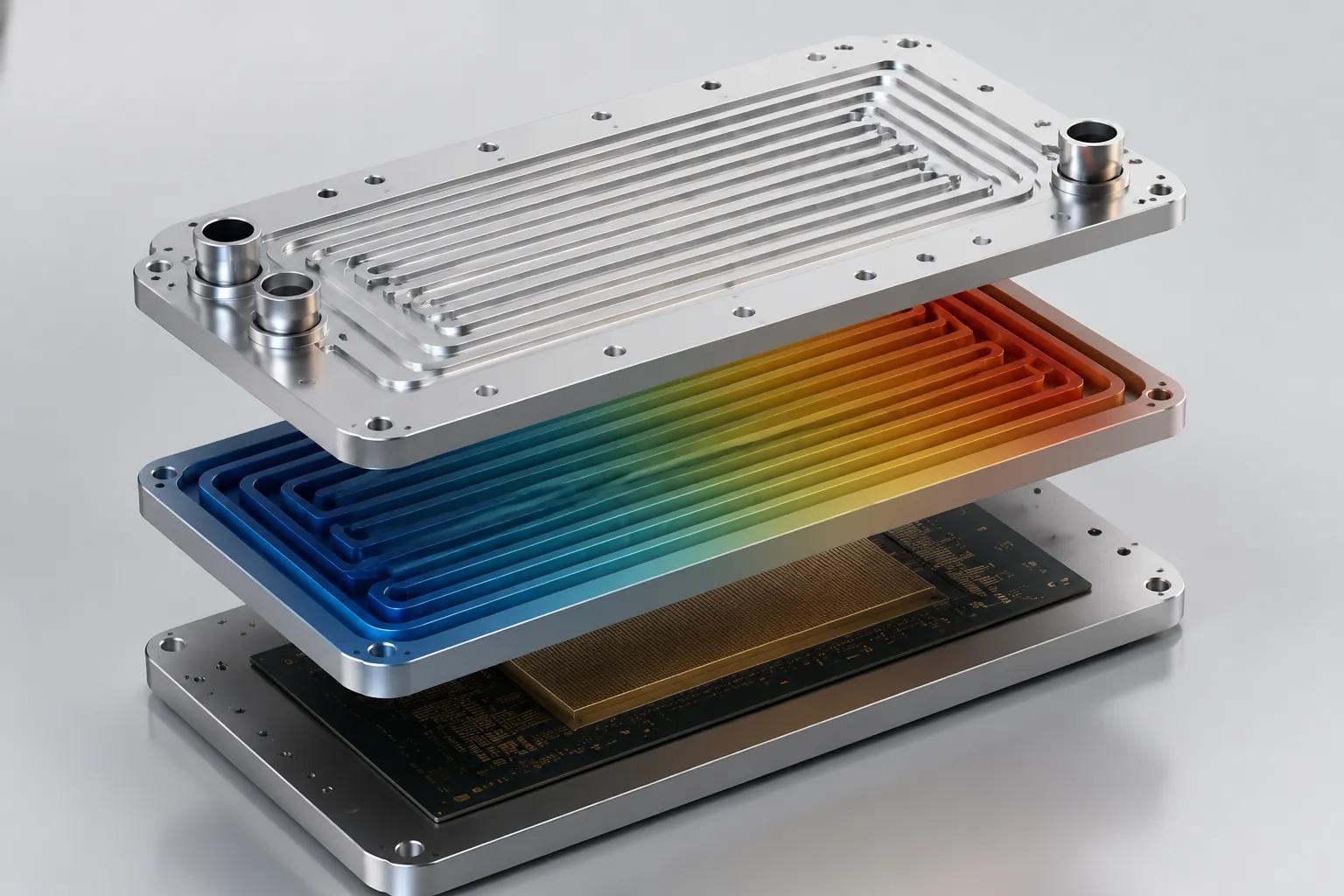
The difficulty of chip-level heat capture is hot-spot suppression: at 300 W/cm² average, local peaks reach 608 W/cm², where plain microchannels form temperature bottlenecks. Jets remove the boundary layer, staggered fins extend the area — together they capture high heat flux at low flow.
A 550 W chip measures 91 °C peak and 5.8 kPa pressure drop at 1.5 L/min — ample thermal margin, minimal hydraulic cost. The design closes the modeling → CFD → fabrication → test loop, with measured data feeding back for next-generation chips.